Walk through any major trade show today, and it becomes easy to spot the stands that draw a crowd. These are not always the biggest or the most expensive stands. Rather, these stop visitors in their tracks, turning their curiosity into action. At a trade show in 2026, you’ll find one of two things: either you’ll see clones of the same hyper-modern style, each stand bleeding into the next until they begin to morph together in your head, or your gaze will snag on the one stand that compels you to pause and lift a finger. Curiosity becomes action.
The brands behind these stands have spotted a shift in mindset. Visitors no longer want to simply pass by a display and let out a sigh of mild approval; they want a reason to stop.
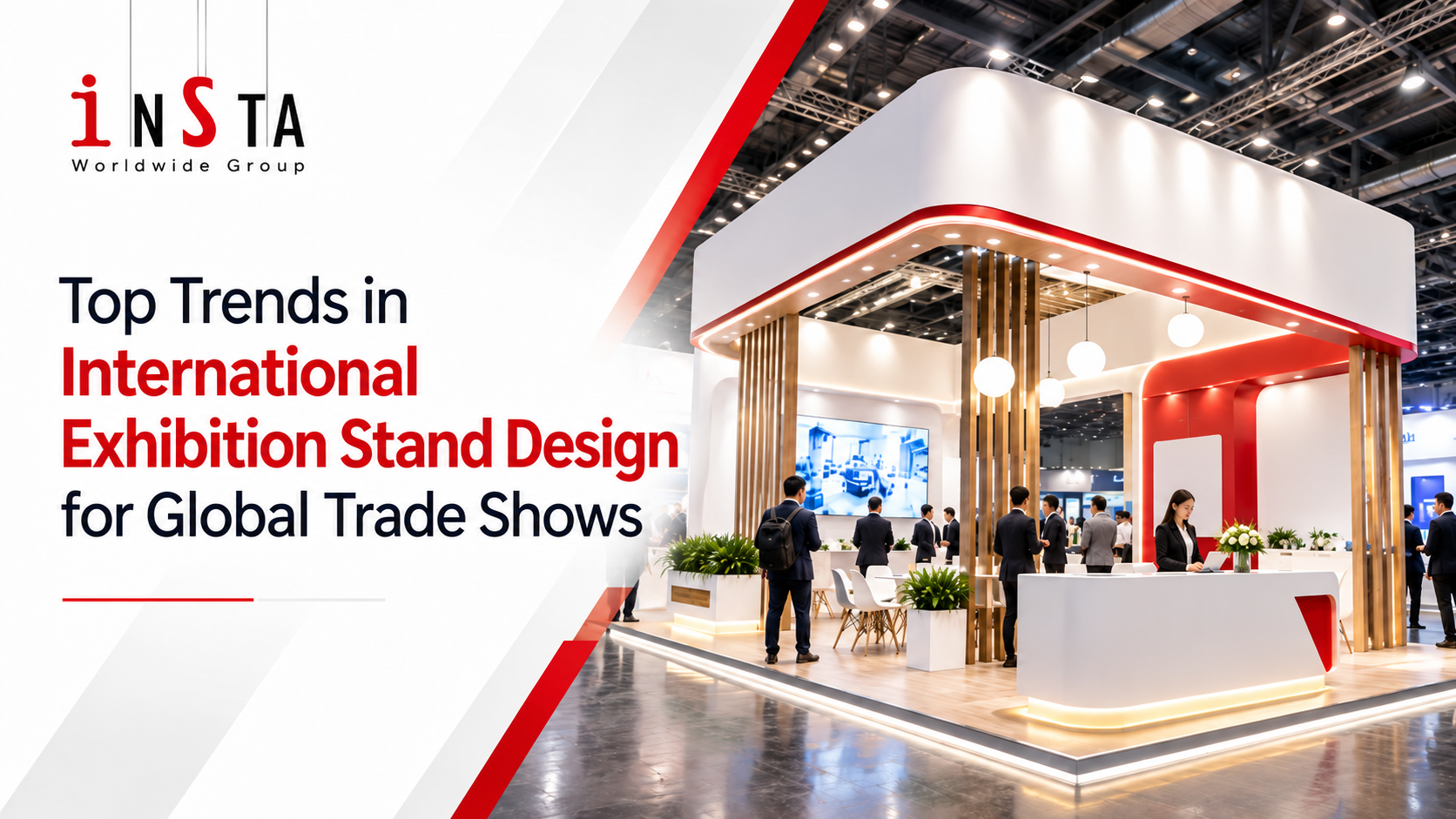
That shift is altering international exhibition stand design, with brands moving beyond static displays toward more memorable and engaging experiences.
With over 20 years of experience in the industry, Insta Group has seen exhibition design evolve with changing visitor expectations. These latest trends show how brands are finding new ways to capture attention and make a stronger impact on the show floor.
What’s Driving Change in International Exhibition Stand Design
Here’s the uncomfortable truth: most exhibitors are still designing for 2019. Big graphic walls. A counter. Some branded furniture. It worked once, but visitor behaviour has now changed. Rising competition for attention at trade shows is driving exhibitors to trade show booth design that stand out immediately and leave a lasting impression. That shift is shaping many of the exhibition stand design trends we see today.
Several shifts are happening at the same time. Sustainability is now a serious consideration, AI is becoming far more accessible and modular stands are reshaping how brands design and reuse spaces. These are not short-term trends. They are steadily becoming part of what people expect from a modern exhibition experience.
What’s Shaping the Next Generation of Exhibition Stands?
Here’s what’s actually moving the needle in global trade show booth design right now:
1. Sustainability That Isn’t Hollow:
Sustainability at a real level means recycled aluminium frames, FSC-certified timber and structures built to be reused across multiple shows instead of dumped after one event. It is not just good optics. Modular components are lighter, ship cheaper and need fewer hands to install, which helps with the budget.
2. Smarter Technology, Smarter Conversations:
AI is no longer just a talking point at trade shows. Brands are using it to track visitor movement, analyse dwell time and identify the most engaged leads in real time. Our exhibition stand builders provide On-stand systems then help teams prioritise follow-ups and tailor conversations based on what visitors interacted with. The result is less guesswork and more focused, high-quality conversations with potential buyers.
3. Custom Looks, Modular Builds:
Another major shift is the rise of modularity. Reusable, reconfigurable stand systems that look custom-built but pack into flight cases and can be reassembled for a different floor plan within hours. The visual gap between modular and fully custom builds has narrowed a lot. Most visitors will not be able to tell the difference, but your accounts team will notice the savings.
4. Interactive Experiences on Demand:
Technology is making exhibition experiences more interactive. Visitors use phones to access product details, watch animations and explore 3D models instantly. Virtual tools also help brands showcase products or environments that cannot be physically brought to events, giving visitors a clearer, more engaging understanding of what is being presented.
5. The “Phygital Shift”:
Next comes the “phygital” design, wherein exhibition spaces are becoming more connected, blending physical stands with digital touchpoints like QR triggers, live demos and online streaming. Real-time data capture helps brands understand visitor interest and fine-tune layouts, messaging and on-stand experiences for more focused, effective events.
As these tools become more embedded in exhibition design, Insta Group uses them to create more purposeful experiences that enhance conversations and make visitor journeys more intuitive and effective.
Final Thoughts
Exhibition stand design trends ultimately come down to one question: will your stand give people a reason to stop? The brands making an impact today are not necessarily spending more, but making smarter design decisions from the outset.
When you want your idea of a global trade show booth design to turn into reality on a busy show floor, execution can make all the difference. With a team of over 400+ professionals and three manufacturing units, Insta Group offers end-to-end exhibition stand design solutions, from concept and design to manufacturing, project management and on-site installation, ensuring a smooth experience across every stage.
Ready to build your next stand? Get in touch with our team today.
FAQs
1. What is the biggest exhibition stand design trend for 2026?
Sustainability and AI-driven personalisation are the biggest exhibition stand design trends in 2026. As procurement teams place greater emphasis on eco-credentials, exhibitors are increasingly using AI tools to deliver more tailored visitor experiences and capture meaningful engagement data.
2. Are modular exhibition stands as good as custom builds?
In many cases, modular exhibition stands are as good as custom builds. Modern modular systems now feature premium graphics, integrated lighting and strong build quality, narrowing the visual gap while offering better flexibility and lower costs across multiple events.
3. How is AI actually used on an exhibition stand?
AI is used on exhibition stands to track visitor movement, measure dwell time and score leads in real time. It also helps teams prioritise high-value visitors and tailor conversations based on what people engage with.
4. Do small exhibitors need to follow these trends too?
Small exhibitors do not need to follow every trend, but selective adoption is important. Focusing on one strong idea, such as a well-executed AR or interactive moment, is often more effective than trying to include everything.