Ever walked through a trade show and realised that most booths are starting to blur into one? The colour palettes change, the logos change, but the experience often feels remarkably similar. That is exactly why only a handful of brands truly stick in visitors’ minds, even when many exhibitors arrive with healthy budgets. Well, the difference is rarely about spending more.
The decision usually comes down to design. Visitor expectations change quickly, and so do the ways people engage with exhibition spaces. That is why exhibition stand design trends continue to shape how brands present themselves on the show floor. At Insta Group, our 20+ years of experience across global trade shows have shown us that staying relevant matters far more than simply going bigger.
The Shift from Decoration to Experience in Trade Show Booth Design
For a long time, booth design was treated like interior decoration. Pick a colour palette, print some graphics, add a counter and call it done. That approach is not just outdated; it is actively working against brands at competitive international shows.
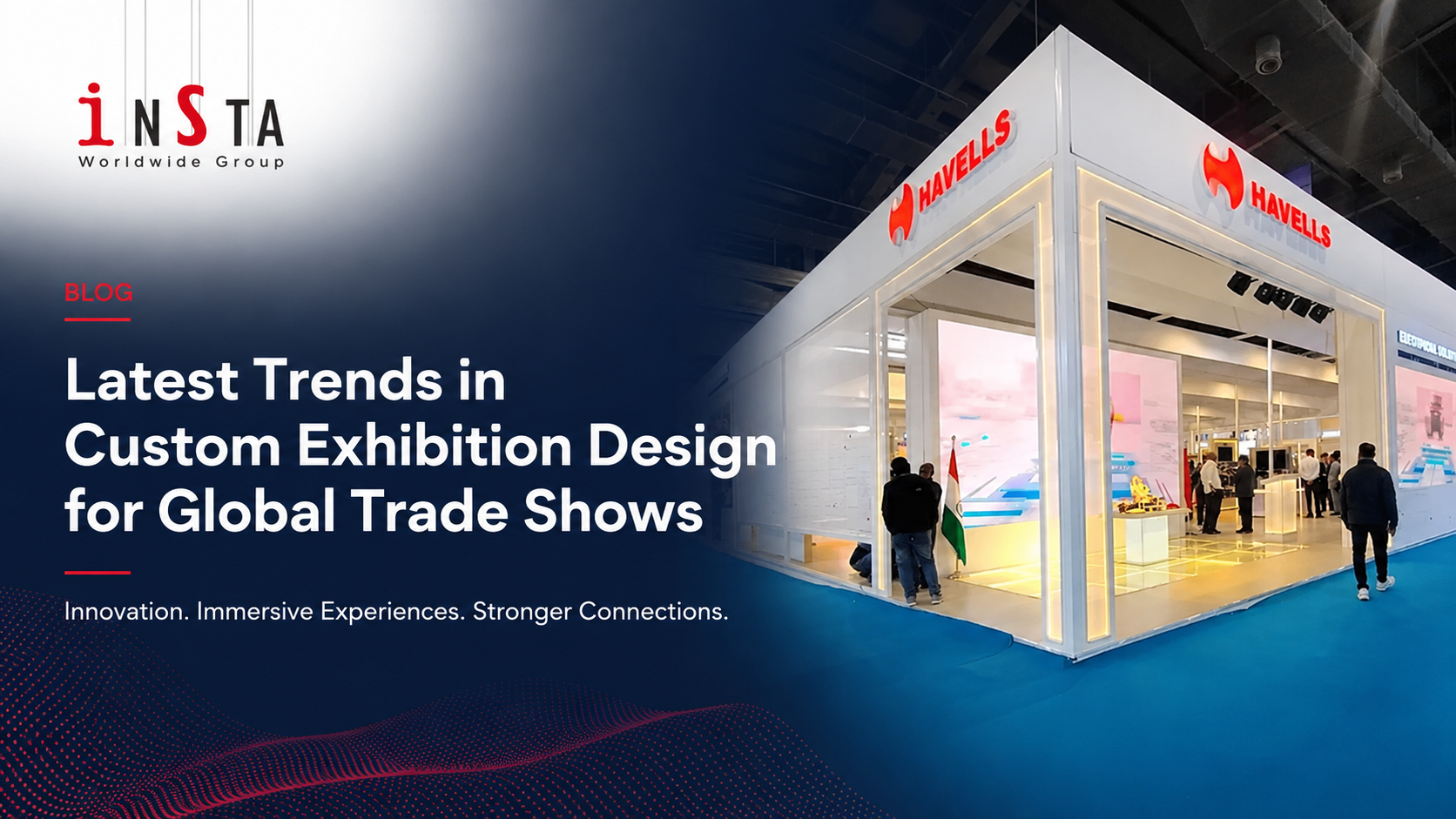
Trade show booth design has now shifted toward something we like to call experience architecture. Visitors at global shows are experienced. They have seen hundreds of booths. What stops them now is not a bright colour or a large logo. It is the feeling they get when they walk past your space, and something pulls them in: a spatial arrangement that draws the eye or a product zone that demands to be interacted with.
The brands doing this well are thinking about:
- Where visitors naturally stop and engage.
- Where the natural pause points are and what happens at those moments.
- How the booth communicates the brand story without relying entirely on printed text.
- What the stand looks and feels like from 15 metres away versus standing inside it.
This is a fundamentally different brief than “make it look good”, and it requires a fundamentally different kind of team to execute it.
What Are the Top Exhibition Stand Design Trends Today?
Three major forces are reshaping what good looks like on the global show floor right now:
● Adaptable Exhibition Stands
Brands exhibiting across multiple cities and geographies cannot afford to build from scratch every time. Modular systems have been around for years, but the smarter version of modularity today is about designing a system that can scale up from a 36 sqm footprint to a much larger one without losing visual coherence. That takes real design thinking upfront, not just an off-the-shelf frame system.
● Technology With Purpose, Not Clutter
The weakest event stall design in recent years are often the ones packed with screens that do not really add value. The stronger ones use technology more thoughtfully, only where it improves how visitors experience the stand. In 2026, brands are focusing less on showy tech and more on how digital tools support storytelling, engagement and simple, smooth lead capture on the floor.
● Materials That Reflect Brand Values
Sustainability is no longer a side conversation. Clients committed to environmental and social responsibility are holding their event presence to the same standard as everything else in their business. That means material sourcing, reusability and end-of-show waste are now part of the design brief, not an afterthought.
● Sensory Design Beyond Visuals
Smell, sound and texture are becoming real design tools. Brands are using ambient audio, material finishes and even scent to make a stand feel different rather than just appear different. When visitors remember how a space made them feel, that is the brand making its mark long after the show has ended.
● Immersive Compact Formats
Large stands don’t automatically mean better results. Smaller, exhibition booth design that aim at one or two clear experiences often perform better than big layouts trying to achieve everything at once. Some of the strongest exhibition stands make visitors feel like a part of a different experience altogether.
● Storytelling Through Space Sequencing
The most talked-about stands at major shows are designed as a journey, with a clear beginning, middle and end. Each of these zones reveals something new to the visitor. Once they enter, they move through a simple narrative, leaving with a clearer understanding of what the brand really stands for.
Putting These Exhibition Design Trends to Work at an International Show
Putting these trends into practice is often where the real challenge begins. A stand needs to do more than look impressive. It has to attract attention, encourage engaging conversations and work just as well in one venue as it does in the next. At the same time, brands are also looking for smarter, more sustainable ways to exhibit. The best stands bring all of these considerations together without making the experience feel less complicated for visitors.
At Insta Group, having worked with Fortune 500 brands across national and international trade shows, we bring this thinking into every stand, translating trade show booth builders into builds that perform on the floor, not just on paper.
Final Thoughts
Trends shift every season, but what actually works on the show floor stays consistent: clear thinking, the right team and enough time in hand. Since 2003, our team at Insta Group has been building exhibition stands across industries, geographies and show scales, and that experience naturally shapes how approach evolving for exhibition stand design company , keeping ideas grounded in what truly works on the floor.
If your next show is already on the calendar, it’s worth starting that conversation now. Strong trade show displays are rarely built at the last minute, and having an experienced eye to guide the process from start to finish can make all the difference.
FAQs
1.What are the most important elements of a successful exhibition stand design?
For a successful exhibition stand design, visual clarity, logical flow and a defined visitor experience work as foundations. The best stands are designed around how people actually behave in a show environment, not how they look.
2.How far in advance should you start planning your trade show booth design?
Start planning your trade show booth layout at least four to six weeks in advance to ensure you can handle design, fabrication, logistics and installation without rushed decisions.
3.Are sustainable exhibition stands more expensive to build?
Not always. Reusable materials, modular structures and eco-friendly graphics might cost more at the start, but they tend to balance out over time. When you cut down on waste and reuse the same elements across multiple shows, the overall cost usually ends up being much lower.
4.What makes trade show displays work at international events?
Clear visuals, simple layouts and technology that just makes sense at first glance work well at international shows, helping people to come and interact without hesitation.